In manufacturing, low-volume, spec-driven keywords often produce better RFQs than broad industry terms because they reflect real buying intent: materials, tolerances, standards, and application requirements. A solid SEO measurement framework proves ROI by tracking quote actions, assisted influence, and sales acceptance, not just traffic.
Why low-volume keywords can outperform high-volume terms
Manufacturing buying teams do not browse casually. They check fit.
A search like “ASTM A276 316L tolerance machining” may show almost no volume, but it is often coming from someone who is:
- defining requirements
- narrowing suppliers
- getting ready to send an RFQ
That is why executive reporting needs a different emphasis.
- Traffic is a supporting metric.
- RFQ intent, quote quality, and sales impact matter more.
The KPI stack that matters
1) Visibility for money pages
Track visibility where revenue is actually created.
What to measure
- impressions and clicks for capability, product, and application pages
- top queries that include standards, grades, tolerances, or compliance terms
- CTR on priority pages, since snippet relevance usually reflects intent match
- directional visibility against key competitors
Why leadership cares
It shows whether you are appearing in searches tied to supplier selection, not just general research.
2) Quote actions
Define quote actions as the behaviors most closely tied to real RFQs.
Core quote actions
- RFQ form submissions
- file uploads, including drawings and specs
- calls from capability, product, or contact pages
- “Request a sample” or “Talk to an engineer” actions, where relevant
Quality signals
- RFQ completion rate from form start to submission
- upload rate, or the percentage of RFQs that include attachments
- required-field completeness, such as material, quantity, tolerance, and need-by date
3) Assisted conversions
In long-cycle B2B sales, the first visit usually does not convert. Technical content often influences the RFQ later in the process.
What to measure
- assisted conversions by page type:
- selection guides
- application notes
- failure-mode articles
- standards explainers
- common page paths that lead to quote actions
- return-visitor conversion rate, especially on technical validation content
Executive framing
This content helps with validation and risk reduction before sales gets involved.
4) Sales acceptance rate and quote quality
This is where SEO starts to hold up in leadership reviews.
What to measure
- Sales Accepted Lead rate from organic and organic-assisted traffic
- quote rate, from RFQ to quote issued
- quote-to-win rate, where available
- disqualification reasons, such as poor fit, price-only inquiries, wrong specs, or wrong geography
The point is not to drive more leads at any cost. The point is to drive better ones.
5) Time-to-quote and lead response speed
Speed matters in industrial quoting, especially when buyers are comparing multiple suppliers.
Track
- median RFQ response time during business hours
- time-to-quote from submission to delivered quote
- win rate by response-time range
- drop-off rate once response time passes a defined threshold
Executive framing
Better measurement and better workflows can shorten quoting time and improve win rates.
Simple attribution setups that work
You do not need perfect attribution to make useful decisions. Start with something reliable.
Option A: Good enough
Track source and medium into the CRM, such as organic, paid, referral, and direct. Add a “How did you hear about us?” field if it helps, but do not make it required.
Report
- organic-sourced RFQs
- organic-assisted RFQs based on analytics paths
Option B: Better
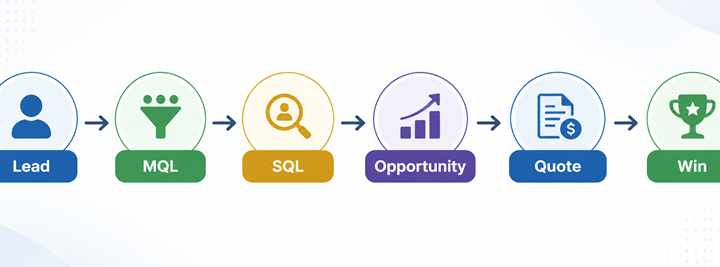
Use consistent UTM tagging for campaigns and email. Align CRM lifecycle stages to the buying journey: lead, MQL, SQL or RFQ, quote, win. Add assisted-influence reporting across analytics and CRM fields.
Option C: Advanced
Build a multi-touch attribution model in your CRM or BI layer. Add call tracking, form tracking, and offline conversion imports where they make sense. Pull everything into one dashboard across Search Console, analytics, CRM, and revenue.
The practical rule is simple: choose the level of complexity your team will actually maintain.
Reporting that earns leadership buy-in
Monthly reporting
Show what changed and what happens next.
- money-page visibility trend
- quote-action trend, including submissions, uploads, and calls
- top assisted pages
- quote-quality snapshot, including acceptance rate and top disqualification reasons
- next 30-day optimization plan across technical SEO, content, and conversion work
Quarterly reporting
Show outcomes in business terms.
- organic-sourced and organic-assisted RFQs and quotes
- influenced pipeline, where you can track it
- conversion-rate improvements on key pages and forms
- response-time and time-to-quote improvements
- top wins and the process behind them
Tie reporting back to a repeatable system: discovery, strategy, implementation, measurement, and optimization.
Proof points
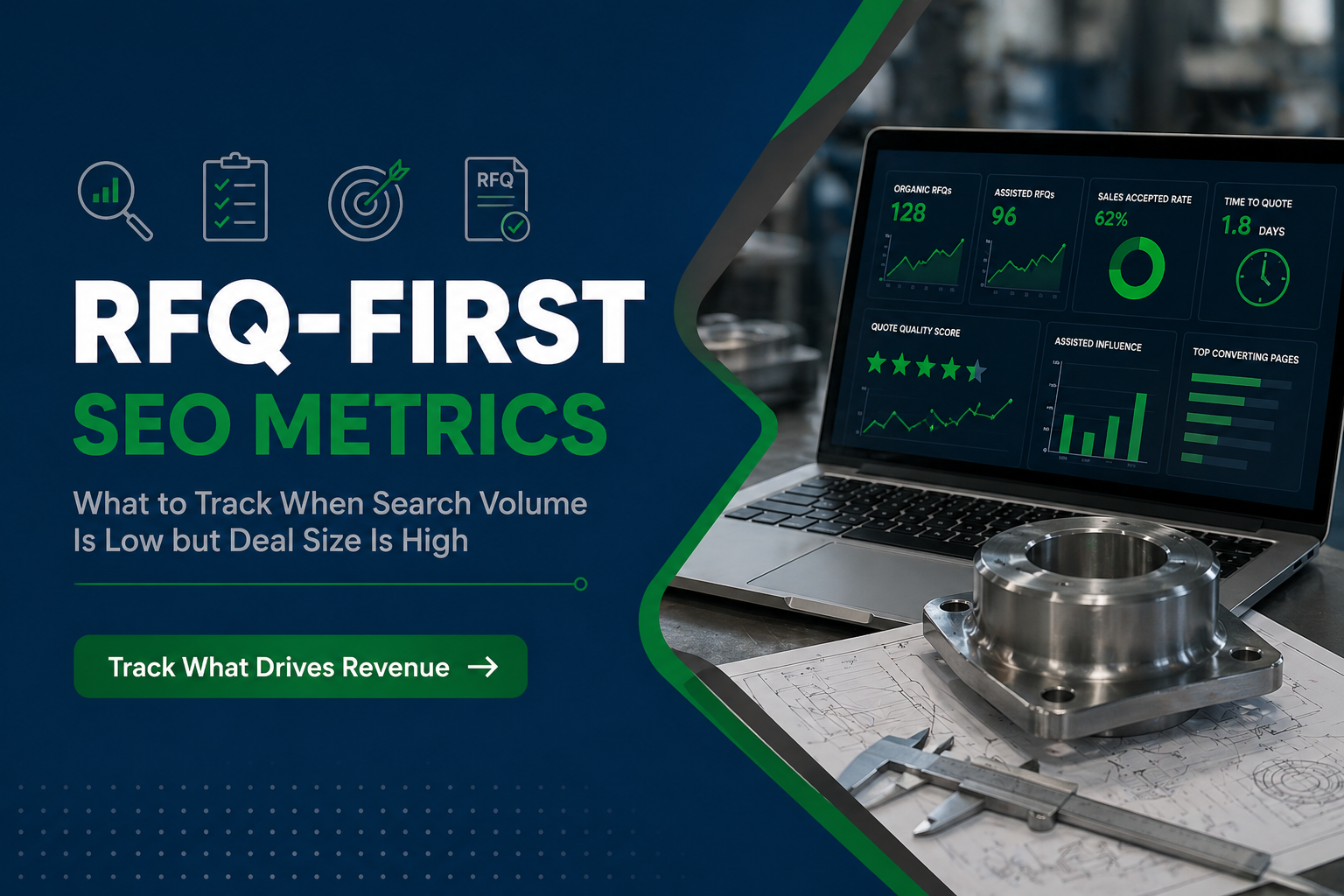
Example dashboard layout
Headline section
- organic-sourced RFQs, with count and trend
- organic-assisted RFQs, with count and trend
- Sales Accepted Lead rate and quote rate
- median response time and time-to-quote
Supporting section
- money-page visibility, including impressions, clicks, and CTR for capabilities and products
- top converting pages and top assisting pages
- form-friction metrics, including start-to-submit rate, upload rate, and error rate
- content gaps around specifier terms you still are not covering
Sample quote-quality rubric
Score each RFQ from 1 to 5 in each category, for a total possible score of 25.
- spec completeness: material, tolerance, finish, quantity, files
- fit: within capabilities, compliance requirements met, realistic timing
- commercial viability: project size, value, repeat potential, timeline
- buyer legitimacy: company details, role, decision influence
- clarity of next step: clear ask, reachable contact, response expectations
Then report:
- average quote-quality score by source
- win rate by score range, such as 20 to 25 versus 10 to 15
Common executive objections
“Traffic is low. Why are we doing SEO?”
Because we are capturing high-intent spec searches that lead to RFQs and quotes, and we can measure that through quote actions, acceptance rate, and assisted influence.
“Can’t we just run ads?”
Paid search can help, but spec-driven SEO builds lasting visibility, lowers acquisition cost over time, and supports the validation content buyers need during evaluation.
“How do we know SEO is not just awareness?”
Because the reporting ties SEO to RFQs, assisted conversions, and quote quality rather than pageviews alone.
Get a Manufacturing SEO + CRO Measurement Plan
If you want reporting that ties search to revenue without turning attribution into a science project, start with a measurement plan.
Get a Manufacturing SEO + CRO Measurement Plan to define:
- your money pages and specifier-focused KPIs
- quote actions and conversion tracking
- assisted-conversion reporting for long buying cycles
- a quote-quality rubric sales will actually use
- monthly and quarterly dashboards leadership can trust